
Air Barriers
Your First Line of Defense Against Air Leaks
An air barrier is designed to control the movement of air through a building’s exterior walls. When properly installed, it helps reduce energy loss, improve indoor comfort, protect against moisture issues, and create a healthier, more efficient building.
Explore the different types of air barriers below to learn which solution is right for your project.
close
What Is an Air Barrier?
An air barrier is a system of materials designed to prevent uncontrolled air movement through the building envelope. Rather than relying on a single product, an effective air barrier is created by connecting multiple components into one continuous, airtight layer around the building.
When properly designed and installed, an air barrier helps:
- Reduce energy loss
- Improve indoor comfort
- Minimize drafts
- Help control moisture movement
- Increase overall building performance
Mechanically Fastened Air Barriers (Building Wraps)
Mechanically fastened air barriers, commonly known as building wraps, are sheet-applied membranes attached to the exterior wall assembly.
While building wraps can perform as effective air barriers, achieving continuous air-tight performance requires careful installation, sealing, and detailing around seams, penetrations, and openings.
Self-Adhered Barrier
Fluid-Applied Air Barrier
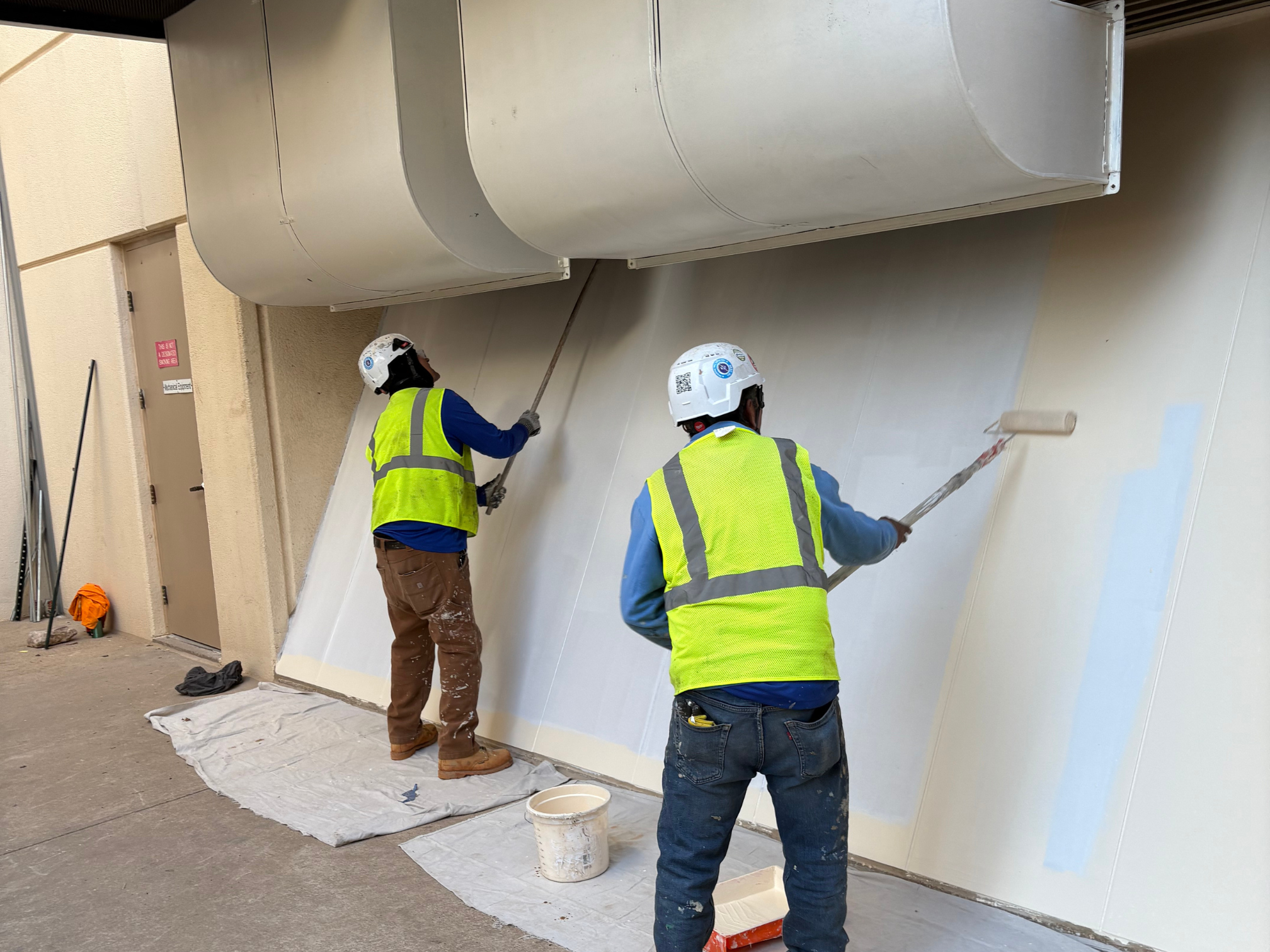
Fluid–applied air barriers are liquid membranes applied directly to a building’s exterior walls to create a continuous, seamless barrier that prevents unwanted air infiltration and exfiltration. They help improve energy efficiency, reduce drafts, and control moisture movement through the building envelope. Once applied and properly cured, the membrane forms a durable protective layer that accommodates minor surface irregularities and helps maintain the building’s overall performance.
Need help selecting the right air barrier system?
Our team can help you choose the best solution for your project, climate, and building requirements.
Related Projects